
Agentic AI Security Starts with Business Logic
AI agents make decisions. APIs execute them. AppSentinels secures the business logic behind every AI action with a Business Logic Graph that maps and governs every agent, tool, API, and data interaction in real time.
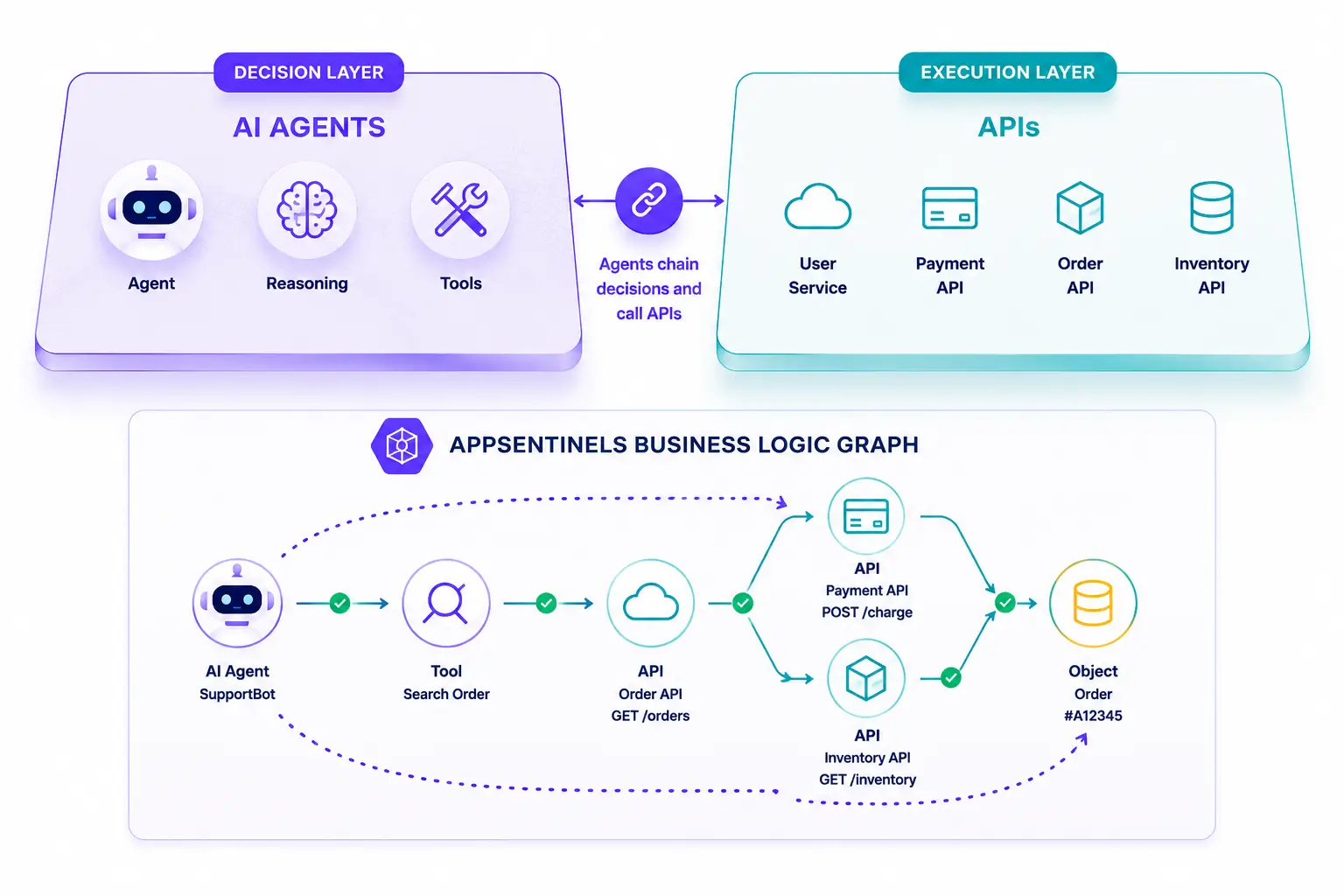
The Attack Surface Just Became Autonomous
Your APIs can now be exploited by AI agents faster and at greater scale than human attackers, often without triggering the signals your security tools rely on. The real risk is when an over-privileged or manipulated agent makes fully authorized requests that violate your business logic and intent.
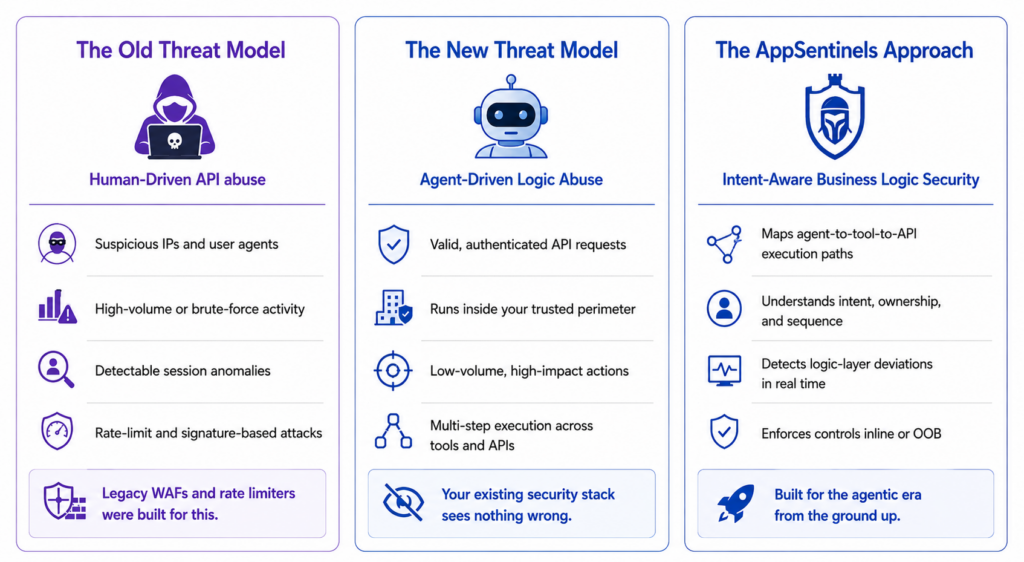
The old threat model
- Slow, detectable request patterns
- Anomalous user-agent or IP signals
- Volume-based rate-limit triggers
- Session behavior deviations
Legacy WAFs and rate limiters were built for this.
The new threat model
- Authenticated, structurally valid requests
- No anomalous IPs; the agent runs inside your perimeter
- Low volume; logic abuse, not brute force
- Chains [PT6.1][SP6.2]5–20 calls across tools and APIs to achieve a goal; sometimes the intended one, sometimes not.
Your existing stack sees nothing wrong.
AppSentinels approach
- Understands expected API sequences & intent
- Maps agent-to-tool-to-API execution paths
- Detects deviations regardless of request validity
- Blocks at the logic layer, inline or OOB
Built for the agentic era from the ground up.
Every Request was Authorized. The Logic Wasn't.
A BOLA flaw in Lovable.dev, a vibe-coding platform with 8M developers, exposed the source code, database credentials, and AI chat histories of every project created before November 2025.

What broke
/projects/{id} API verified every caller’s login token, then returned any project’s data, because it never checked who actually owned the object. A textbook BOLA.
Why the stack missed it
WAFs and SIEMs saw well-formed, authenticated calls and waved them through. They’re blind to BOLA, privilege-escalation chains, and intent violations, the logic layer they were never built to see.
Why it matters now
Vibe-coding accelerates a problem business logic has always had. The flaw sat open 48 days; the next one ships at AI speed. Authorization logic needs its own runtime.
Secure Every Stage of the Agent Lifecycle
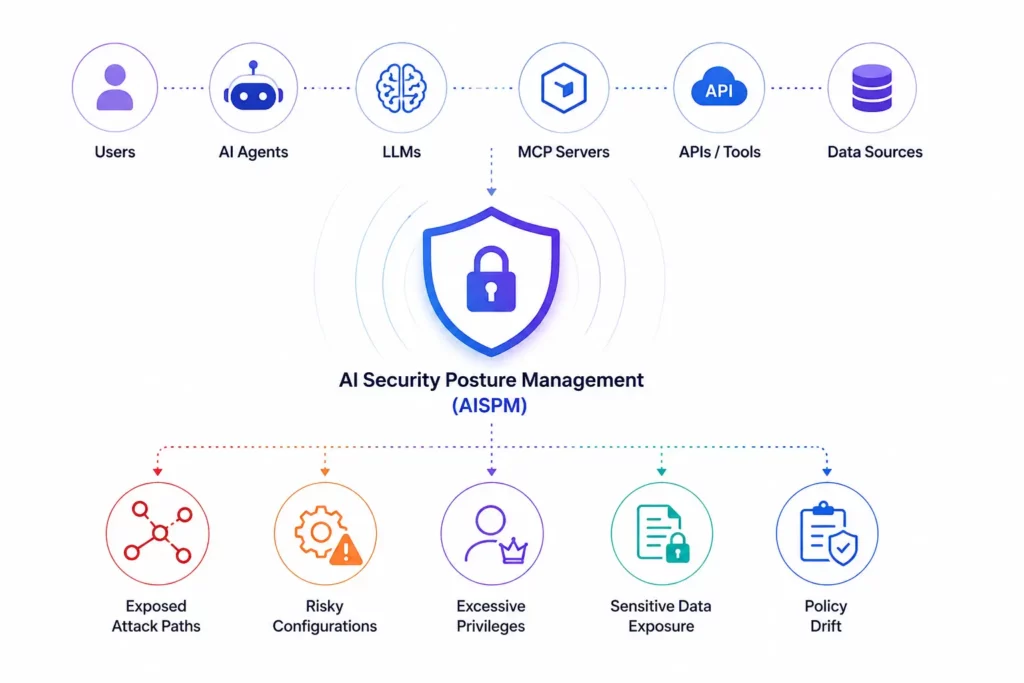
AppSentinels covers the full agentic attack surface through four continuous capabilities: the same pillars that secure your APIs, now extended to the agents that drive them.
Continuous Discovery
Inventory every agent, MCP server, tool, and downstream API the moment it appears, including shadow agents spun up by developers and AI assets, custom runtimes, and SaaS platforms.
The BLG is built from observed behavior, not declared configs.
- Agent, MCP server, and tool discovery
- API and object inventory with ownership mapping
- Bedrock AgentCore, CloudWatch, and control-plane integration
- Shadow AI and unauthorized tool detection
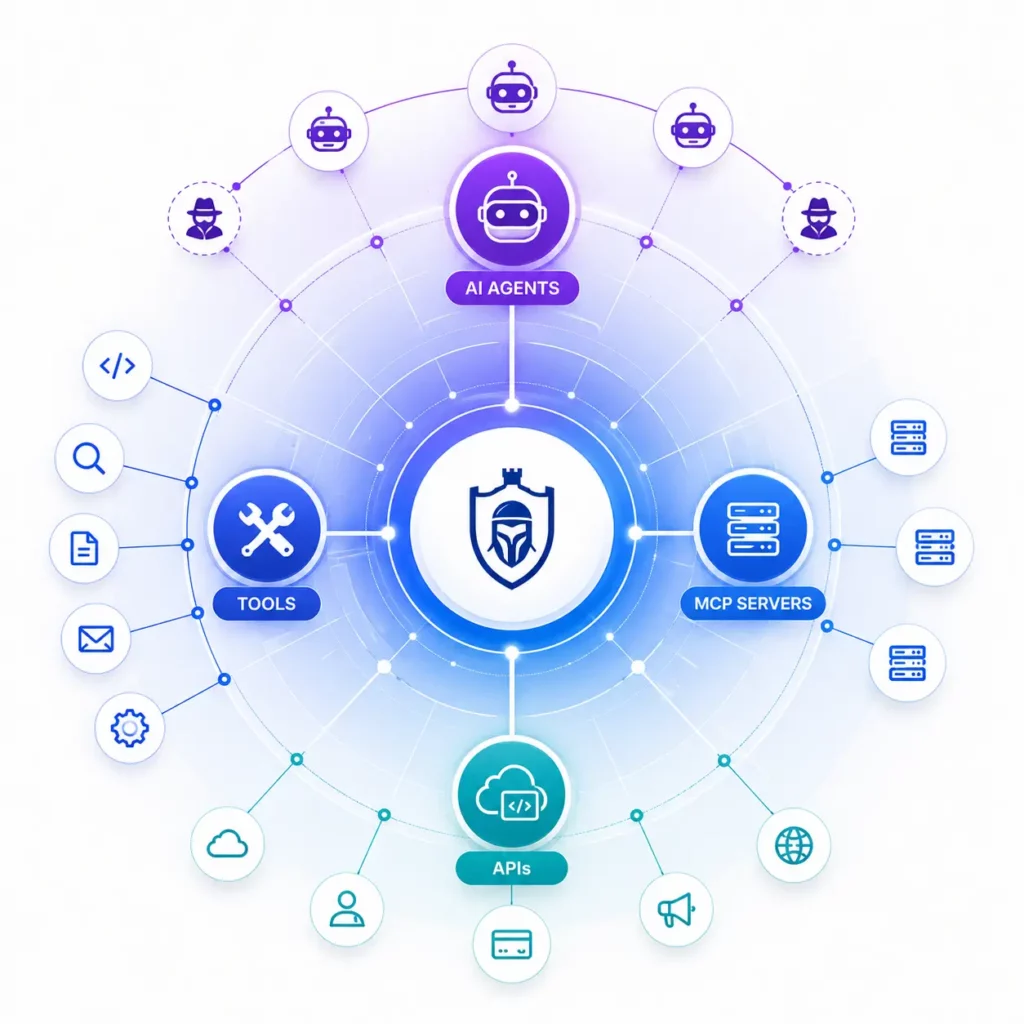
AI Security Posture Management
Agentic AI environments change continuously. We continuously assess your AI ecosystem for exposed attack paths, risky configurations, excessive privileges, sensitive data exposure, and policy drift across agents, MCP servers, APIs, and LLM interactions.
- AI, agent, MCP, and API posture visibility
- Misconfiguration and excessive-permission detection
- Sensitive data, prompt leakage, and policy drift analysis
- Continuous compliance against OWASP LLM, API, and internal governance policies
Continuous Red-Teaming
Continuously probe your agents and the APIs they call, looking for prompt injection paths, tool poisoning, missing authorization, privilege escalation chains, and intent violations that emerge only at the logic layer.
- Agent-specific adversarial testing (prompt injection, jailbreaks, tool abuse)
- BOLA, BFLA, and business logic abuse simulation
- MCP and A2A attack surface coverage
- Pre-production and production-safe modes
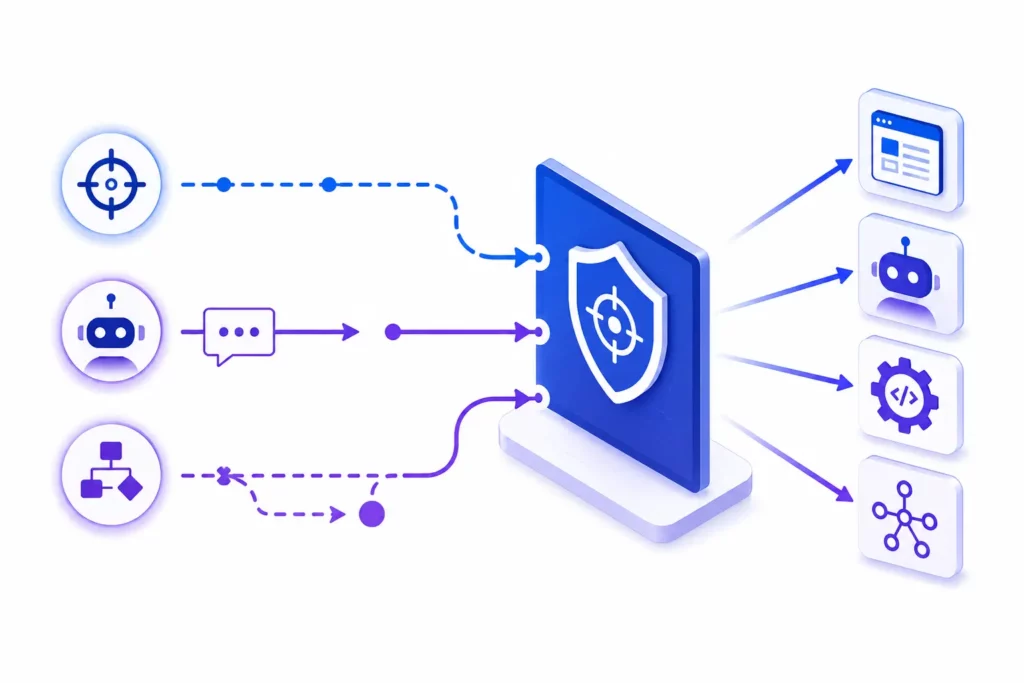
Runtime Protection
Enforce ownership, intent, and sequence on every agent action in real time. When an agent’s chain of calls deviates from legitimate workflows, even if every individual request is authorized, we block at the logic layer.
- Inline or OOB enforcement
- MCP proxy instrumentation
- Agent-to-tool-to-API trace correlation
- Real-time blocking of BOLA, privilege escalation, and intent violations
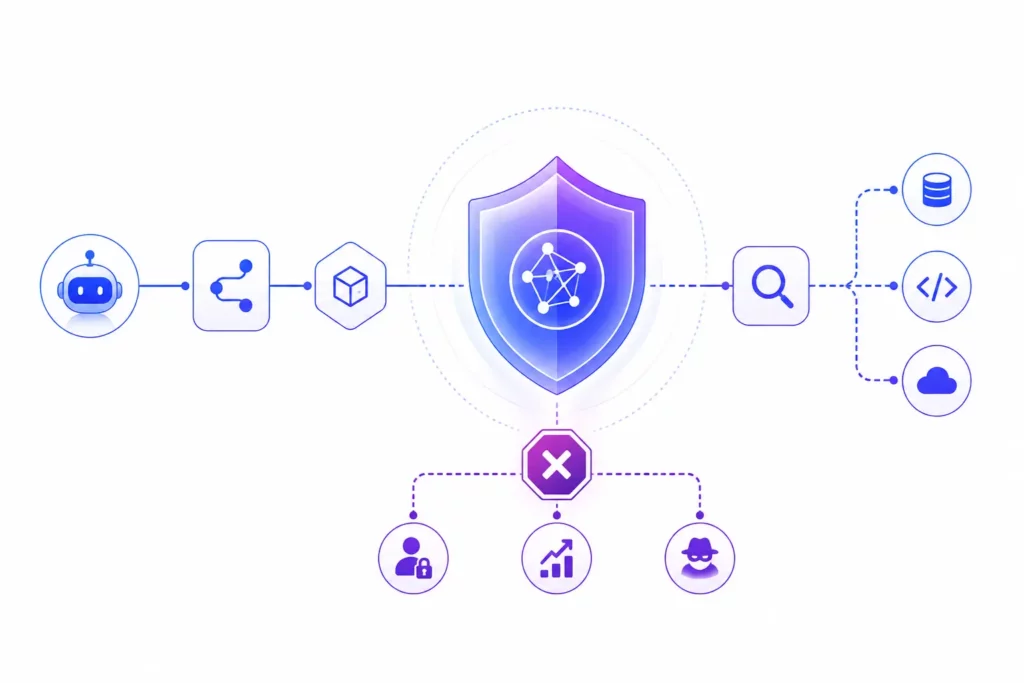
Secure Every Stage of the Agent Lifecycle
AI agents don't live at the network perimeter. They run inside your Kubernetes clusters, behind your microservice mesh, inside your cloud VPCs. AppSentinels deploys with them and not in front of them.
- On-premises
- Deploy inside your perimeter
- Complete control of your data
- Meets data sovereignty requirements
- SaaS
- Fastest deployment model
- Fully managed operations
- Analytics powered by the AppSentinels cloud
- Hybrid
- Flexible deployment across cloud and on-premises
- Balance security and flexibility
- Unified visibility everywhere
- Air-Gapped Deployment
- No external connectivity
- Designed for classified environments
- Maximum operational isolation
Secure Autonomous AI Systems with
Enterprise-Grade Security
The BLG enforces ownership, intent, and sequence on every agent action in real time. When an agent’s chain of calls deviates from legitimate workflows, even if every individual request is authorized, we block at the logic layer.
Frequently Asked Questions
What exactly does AI Discovery find that traditional API discovery misses?
What makes AI posture management different from generic cloud security posture management?
What is prompt hardening and how does AppSentinels implement it?
Prompt hardening makes an AI agent’s instructions resilient to injection and manipulation. AppSentinels’ Red-Teamer attacks your prompts using direct injection, indirect injection via documents or tool outputs, multi-turn manipulation, and jailbreak patterns. Where it finds gaps, it generates specific fixes: instruction boundaries, explicit refusal rules, tool output validation, and contextual action constraints.
How does AppSentinels enforce business logic rules for AI agent workflows without breaking legitimate use cases?
It learns before it enforces. AppSentinels observes normal traffic to build a baseline, covering expected API sequences, session behavior, data access patterns, role-specific actions. Enforcement rules come from that observed baseline, not hand-written policies, so legitimate workflows are already included. When a deviation is flagged, teams can review and approve edge cases, which fold back into the model. False positive rates drop sharply within the first few weeks.